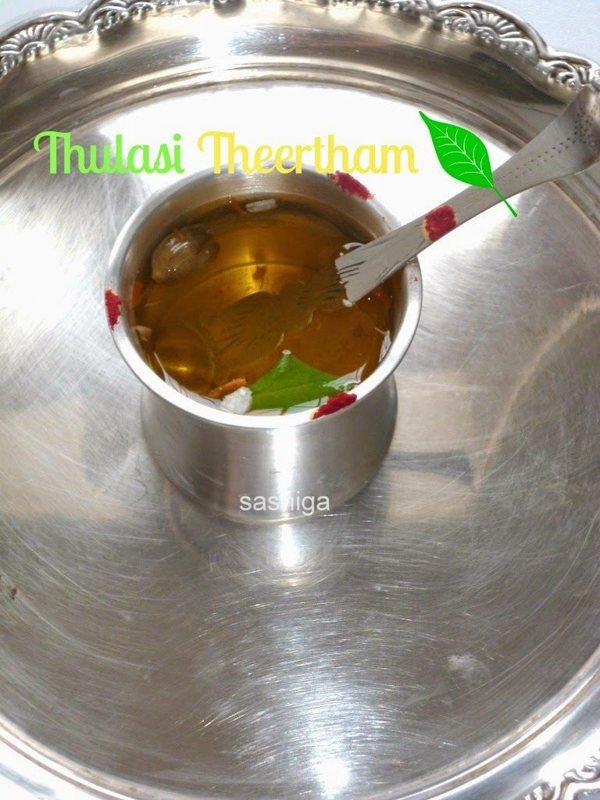
Tīrtha · Holy Water
Tīrtha — Holy Water
Tīrtha is the sanctified water offered to the deity and then given to devotees as prasāda. It is received in the right palm (held over the left), sipped reverently, and the remaining drops touched to the head.
Tīrtha Mantra
akāla-mṛtyu-haraṇaṁ sarva-vyādhi-nivāraṇam
samasta-pāpa-kṣaya-karaṁ śrī nārāyaṇa-padodakaṁ pāvanaṁ śubham
The water from the feet of Śrī Nārāyaṇa — purifying and auspicious — removes untimely death, wards off all disease, and destroys all sins.
Preparing the Tīrtha
To clean water, add:
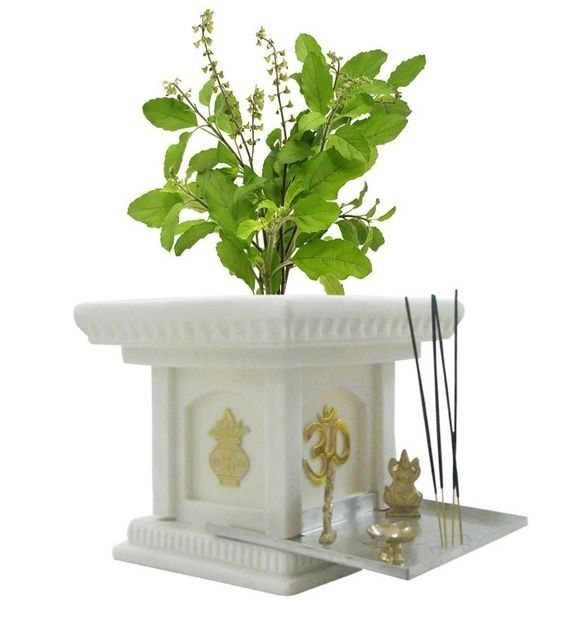
- Tulasī leaves
- Gaṅgā jal
- Turmeric
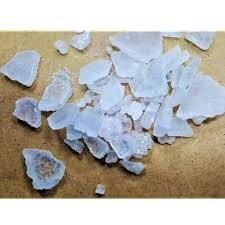
- Edible camphor (pacchai karpūram)
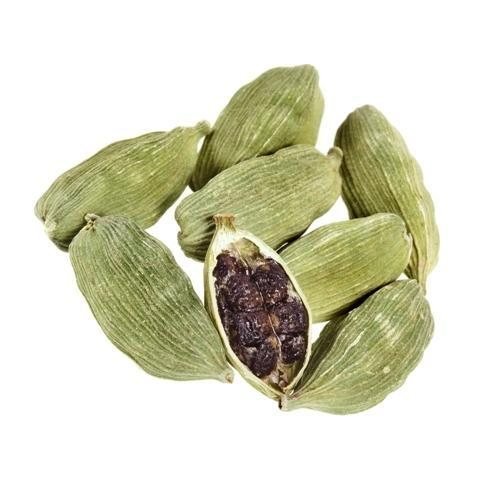
- Cardamom
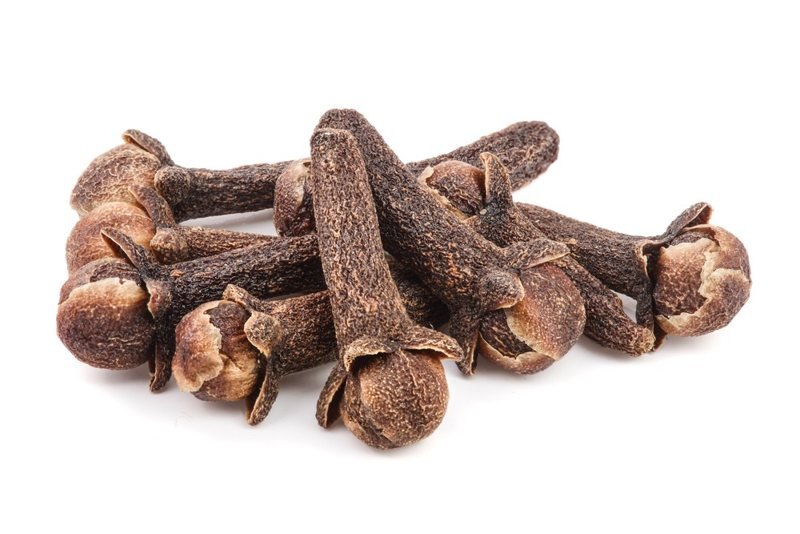
- Cloves
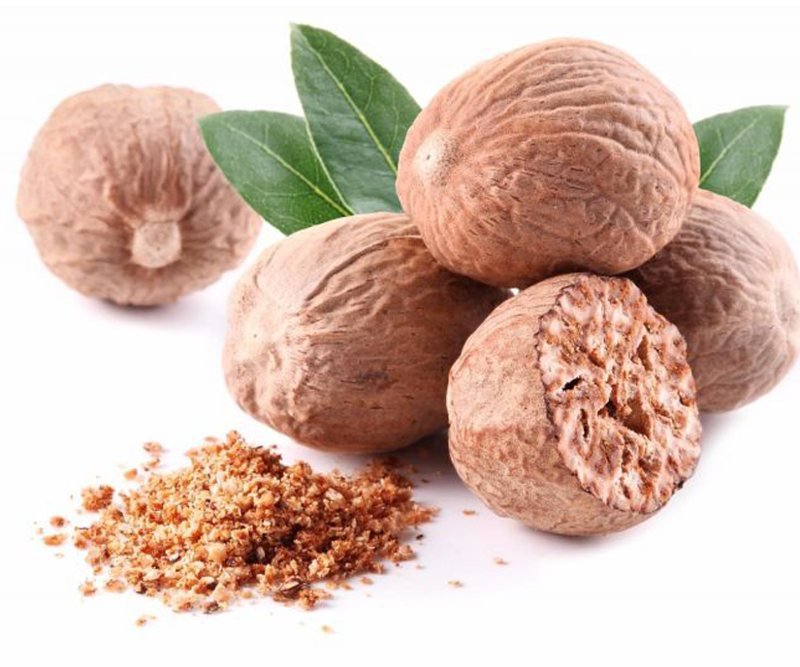
- Nutmeg powder
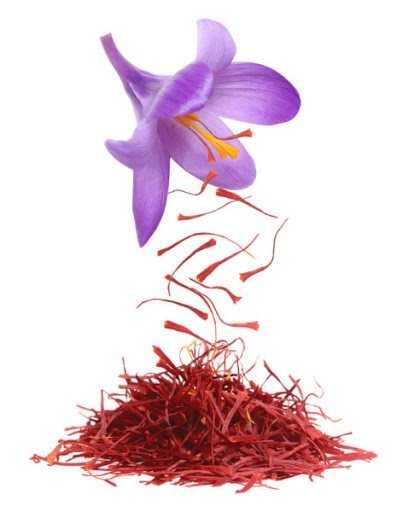
- Saffron
Traditional benefits of the ingredients
As taught in Āyurveda and tradition (not a substitute for medical advice):
Tulasī — spiritualSāttvic, increases bhakti; reduces ego and anger; brings manaḥ-śānti (peace of mind), calmness and stress relief; sharpens buddhi (intellect) and citta (memory).
Tulasī — physicalAntiseptic and anti-inflammatory; traditionally used for colds, coughs, sore throat, fever and headache, digestion, mouth and skin complaints, and to support immunity.
CardamomAntioxidant; aids digestion, freshens the breath and supports oral health.
ClovesRich in antioxidants; antibacterial; supports digestion and oral health.
Edible camphorUsed for colds and coughs and to strengthen a weak digestive fire.
NutmegSoothes indigestion; traditionally used for restful sleep (in very small amounts).
SaffronAntioxidant; traditionally associated with a cheerful mood and good memory.
Betel leaf (vetrilai)Offered to Āñjaneya — the leaves Sītā is said to have blessed; a breath-freshener rich in vitamins and calcium.
Return to the daily pūjā procedure.