Naivedya · Akṣatā · Karpūra
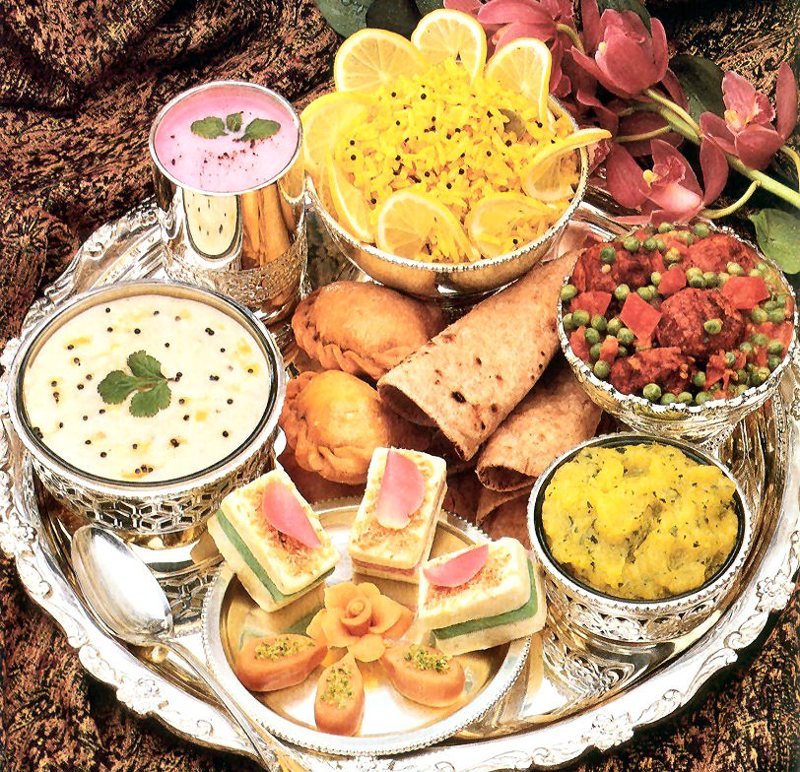
Naivedya — Food Offered to God
Naivedya is food first offered to God; once offered, it becomes prasāda — God’s grace, shared with all. It is prepared with purity, without tasting beforehand, and offered with love.
Pañca Bhūta offerings — the five elements
In mānasa (mental) or short pūjā, the five elements themselves are offered to the deity, each with its bīja mantra:
| Element | Offering | Mantra |
|---|---|---|
| Pṛthvī — Earth | Gandha (sandal paste) | oṁ laṁ pṛthvyātmane gandhaṁ kalpayāmi |
| Āpaḥ — Water | Jala / naivedya | oṁ vaṁ ambātmane jalaṁ kalpayāmi |
| Vāyu — Air | Dhūpa (incense) | oṁ yaṁ vāyvātmane dhūpaṁ kalpayāmi |
| Agni — Fire | Dīpa (lamp) | oṁ raṁ agnyātmane dīpaṁ kalpayāmi |
| Ākāśa — Ether | Puṣpa (flowers) | oṁ haṁ ākāśātmane puṣpaṁ kalpayāmi |


Akṣatā — the unbroken rice
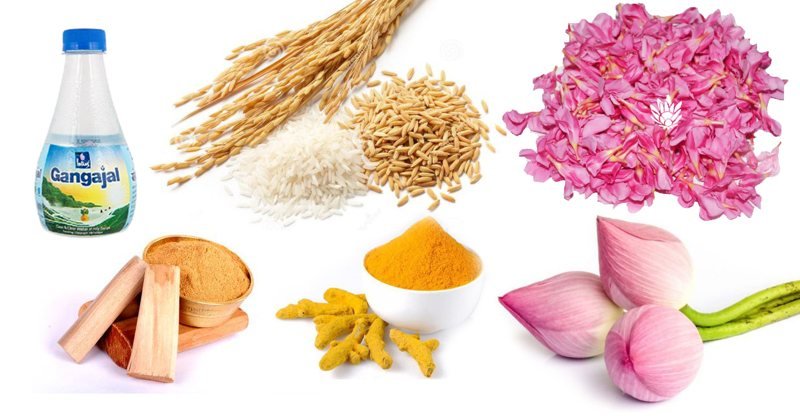
Akṣatā means “unbroken.” Whole rice grains mixed with turmeric (and sometimes kumkum) are used to bless and to offer. In rituals the arrangement carries the five elements in layers:
- First layer — Naivedya · Pṛthvī (earth)
- Second layer — Kalaśa · Āp-tattva (water)
- Third layer — Tejas-tattva (fire)
- Fourth layer — Vāyu-tattva (air)
- Fifth layer — Ākāśa-tattva (ether)
Karpūra — camphor ārati
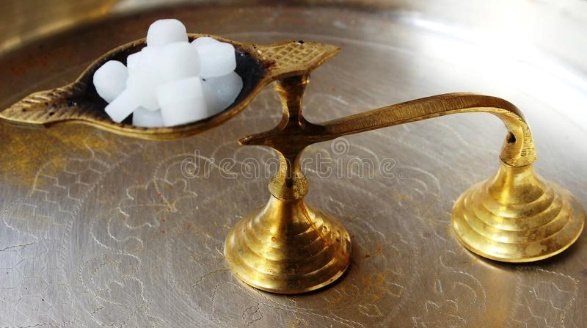
Camphor burns completely, leaving no residue — a symbol of the ego burning away in the light of the Divine. Traditionally camphor is also valued as an antiseptic and decongestant that purifies the air.
See also Ṣoḍaśa Upacāra and Tīrtha.