Pūrvāṅga Pūjā — the Preliminary Worship
Pūrvāṅga means “the part that comes first.” Before worshipping any deity, the sādhaka purifies body, mind and place, salutes the Guru and Gaṇapati, steadies the breath, and declares the purpose of the pūjā. Follow these steps in order, every day.
1. Mantra for Purification
auṃ apavitraḥ pavitrō vā sarvā avasthāṁ gatō api vā
yaḥ smarēt puṇḍarīkākṣaṁ sa bāhyābhyantaraḥ śuciḥ
śrī puṇḍarīkākṣa · śrī puṇḍarīkākṣa · śrī puṇḍarīkākṣa
Whether impure or pure, in whatever condition one may be — whoever remembers Puṇḍarīkākṣa, the lotus-eyed Lord Viṣṇu, becomes pure outwardly and inwardly.
2. Pañcarātra Ācamanam
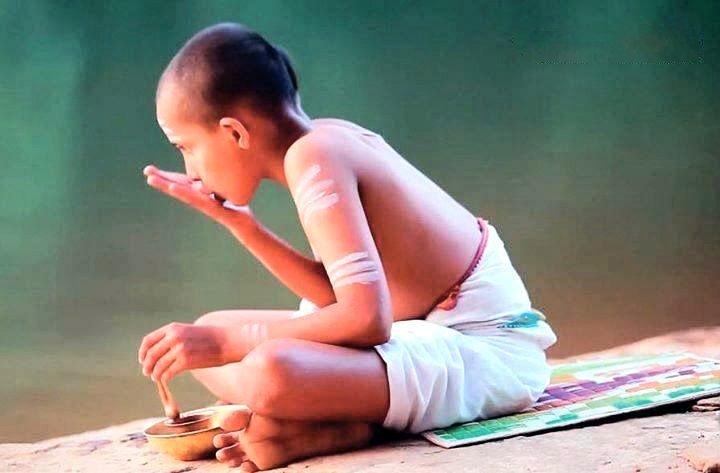
Sip a little water from the right palm with each name:
auṃ acyutāya namaḥ ||
auṃ anantāya namaḥ ||
auṃ gōvindāya namaḥ ||
Salutations to the Imperishable One · to the Infinite One · to Govinda.
3. Aṅga Vandanam

Touch each part of the body while chanting the name of Viṣṇu:
| Name (right) | Name (left) | Touch | With |
|---|---|---|---|
| kēśavā | nārāyaṇā | Right cheek · Left cheek | Thumb |
| mādhavā | gōvindā | Right eye · Left eye | Ring finger |
| viṣṇu | madhusūdanā | Right nostril · Left nostril | Index finger |
| trivikramā | vāmanā | Right ear · Left ear | Little finger |
| śrīdharā | hṛṣīkēśā | Right shoulder · Left shoulder | Middle finger |
| padmanābhā | dāmōdarā | Navel · Head | All the fingers |
More on Aṅga Vandanam.
4. Guru Dhyānam — with folded hands
gurur brahmā gurur viṣṇuḥ gurur dēvō mahēśvaraḥ
guruḥ sākṣāt paraṁ brahma tasmai śrī guravē namaḥ
The Guru is Brahmā, the Guru is Viṣṇu, the Guru is Lord Maheśvara. The Guru is verily the Supreme Brahman — salutations to that Śrī Guru.
5. Vighnēśvara / Gaṇapati Dhyānam

Gently tap the two temples five times with the knuckles of both hands while chanting:
śuklāmbaradharaṁ viṣṇuṁ śaśivarṇaṁ caturbhujam
prasanna vadanaṁ dhyāyēt sarva vighnōpaśāntayē
Meditate on the all-pervading Lord, clad in white, bright as the moon, four-armed, with a gracious face — for the removal of all obstacles.
6. Prāṇāyāmam
auṃ bhūḥ · auṃ bhuvaḥ · ōgum suvaḥ
auṃ mahaḥ · auṃ janaḥ · auṃ tapaḥ · ōgum satyam
auṃ tat savitur varēṇyaṁ bhargō dēvasya dhīmahi
dhiyō yō naḥ pracōdayāt
auṃ āpō jyōtī rasō’mṛtaṁ brahma bhūr bhuvas suvarōm
The seven worlds (vyāhṛtis) are invoked, then the Gāyatrī, and finally its crown (śiras): Om — He is water, light, essence and nectar; He is Brahman, the earth, the atmosphere and the heavens. Chant this with controlled breathing — inhale, hold, exhale.
7. Saṅkalpam
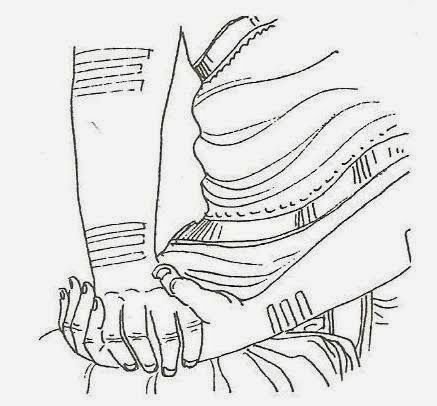
mamōpātta samasta duritakṣaya dvārā śrī paramēśvara prītyarthaṁ
kariṣyamāṇasya karmaṇaḥ nirvighnēna parisamāptyarthaṁ ādau vighnēśvara pūjāṁ kariṣyē
For the removal of all the sins I have accumulated, for the pleasure of the Supreme Lord, and so that the work I am about to do is completed without obstacles — I first worship Vighneśvara.
Full explanation: Saṅkalpa Vidhi.
8. Sakala Dēvatā Vandanam — salutation to all the gods
ābrahma lōkāt aśēṣāt ālōkālōka parvatāt
yē vasanti dvijā dēvāḥ tēbhyō nityaṁ namō namaḥ ||
To all the gods and twice-born beings who dwell everywhere — from the world of Brahmā down to the Lokāloka mountain at the edge of the world — salutations, always.
9. Dīpa Mantram
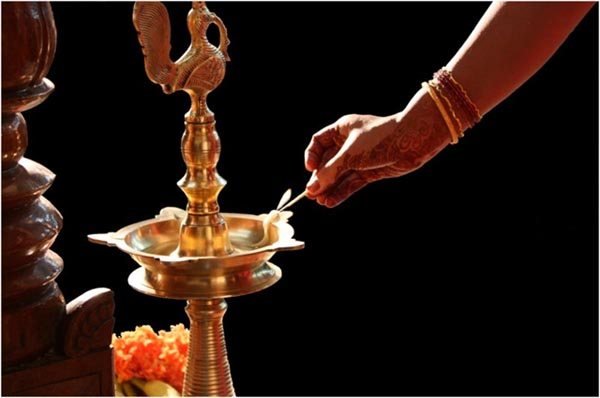
śubhaṁ karōti kalyāṇam ārōgyaṁ dhana-sampadaḥ
śatru buddhi vināśāya dīpa jyōtir namōstutē
dīpa jyōtiḥ paraṁ brahma dīpa jyōtir janārdanaḥ
dīpō haratu mē pāpaṁ dīpa jyōtir namōstutē
Salutations to the light of the lamp, which brings auspiciousness, health and wealth, and destroys hostile thoughts. The lamp’s light is the Supreme Brahman, it is Janārdana — may it remove my sins.
More on the Dīpam.
10. Āsana Pūjā — worship of the seat
pṛthvī tvayā dhṛtā lōkā dēvi tvaṁ viṣṇunā dhṛtā
tvaṁ ca dhāraya māṁ dēvi pavitraṁ kuru cāsanam
O Mother Earth, all the worlds are held by You, and You are held by Viṣṇu. O Devī, hold me too, and make this seat pure.
11. Ātma Pūjā — worship of the Self
ātmanē namaḥ · antarātmanē namaḥ
jīvātmanē namaḥ · paramātmanē namaḥ
dēhō dēvālayaḥ prōktaḥ jīvō dēvaḥ sanātanaḥ
tyajēd ajñāna nirmālyaṁ sōhaṁ bhāvēna pūjayēt
Salutations to the Self, the inner Self, the individual Self and the Supreme Self. The body is the temple; the Jīva is its eternal deity. Discard the wilted flowers of ignorance and worship with the feeling “I am He.”
12. Ghaṇṭā Pūjā — worship of the bell

āgamārthaṁ tu dēvānāṁ gamanārthaṁ tu rakṣasām
ghaṇṭāravaṁ karōmyādau dēvatāhvāna lāñchanam
I ring the bell at the start — to welcome the divine beings and send away negative forces; its sound is the sign of invoking the deity.