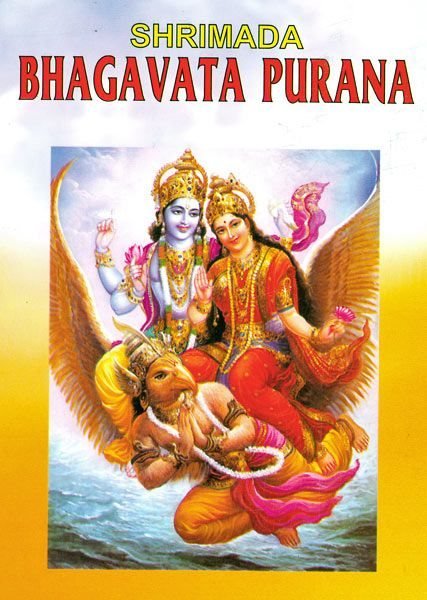
Śrīmad Bhāgavata Purāṇa
The Bhāgavatam, composed by Veda Vyāsa and narrated by his son Śuka to King Parīkṣit in the last seven days of the king’s life, is the crown of the Purāṇas — 18,000 ślokas in 12 cantos, centred on devotion to Lord Kṛṣṇa.
Vyāsa composed it, on the advice of Nārada, after he felt that even the Vedas, Upaniṣads and Mahābhārata had not fully satisfied his heart — because they had not sung the glories of the Lord in full.
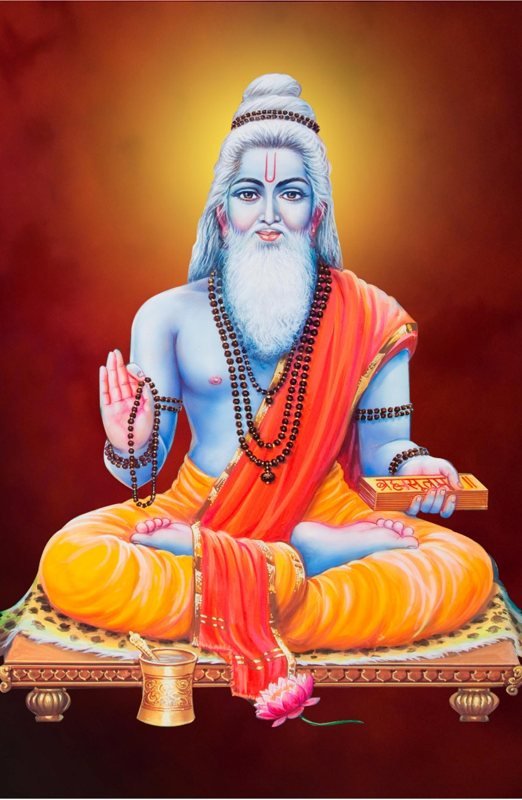
| Author | Bhagavān Veda Vyāsa, at his āśrama at Śamyāprāsa on the west bank of the Sarasvatī, in Badarikāśrama (Bhāgavatam 1.7.2–8) |
|---|---|
| Inspired by | Devarṣi Nārada, who told the dissatisfied Vyāsa to sing the glories of the Lord (Bhāgavatam 1.5–6) |
| First narration | Śrī Śukadeva Gosvāmī to King Parīkṣit on the bank of the Gaṅgā, in the seven days before the king’s death — the origin of the Bhāgavata Saptāha |
| Second narration | Sūta (Ugraśravas), who heard Śuka, to Śaunaka and the sages at Naimiṣāraṇya (Bhāgavatam 1.1) |
| Yuga | The beginning of Kali Yuga, just after Śrī Kṛṣṇa returned to His abode (Bhāgavatam 1.3.43) |
| Size | 18,000 ślokas in 12 skandhas (cantos) and about 335 chapters (Bhāgavatam 12.13.4–9) |
| Group | Sāttvika Purāṇa (Padma Purāṇa, Uttara Khaṇḍa 236.18) |
The twelve skandhas
| Skandha | Main subject |
|---|---|
| 1 | Sūta and the sages; Vyāsa and Nārada; the Pāṇḍavas after the war; Parīkṣit and Kali’s five places |
| 2 | Śuka begins; meditation on the Virāṭ form; the ten subjects of the Purāṇa |
| 3 | Vidura and Maitreya; creation; the cycles of time and the life of Brahmā; Kapila’s teaching to Devahūti |
| 4 | Dakṣa and Satī; Dhruva; Pṛthu; the Pracetās |
| 5 | Ṛṣabhadeva; Jaḍa Bharata; the structure of the universe and the lokas |
| 6 | Ajāmila and the power of the Name; Vṛtrāsura |
| 7 | Prahlāda and Lord Nṛsiṁha; varṇāśrama dharma |
| 8 | Gajendra Mokṣa; the churning of the ocean; Vāmana and Bali |
| 9 | The solar and lunar dynasties; the story of Śrī Rāma |
| 10 | The life and līlās of Śrī Kṛṣṇa — Vṛndāvana, Mathurā and Dvārakā; Rāsa Pañcādhyāyī |
| 11 | The Uddhava Gītā; the Avadhūta and his 24 gurus; the end of the Yādavas |
| 12 | The signs of Kali Yuga; the power of the Divine Name; Parīkṣit’s liberation; Mārkaṇḍeya |
The ten subjects of the Bhāgavatam
The Bhāgavatam itself states its ten subjects: creation, secondary creation, sustenance, protection, the impulses for action, the Manvantaras, the stories of the Lord, dissolution, liberation and the final shelter (āśraya). The first nine exist to reveal the tenth — the Lord, the shelter of all.
Śāstra Pramāṇa — the scriptural authority
Śrīmad Bhāgavatam 1.1.3
nigama-kalpa-taror galitaṁ phalaṁ
śuka-mukhād amṛta-drava-saṁyutam
pibata bhāgavataṁ rasam ālayaṁ
muhur aho rasikā bhuvi bhāvukāḥ
O you who know its taste, drink again and again of the Bhāgavatam — the ripened fruit of the wish-fulfilling tree of the Vedas, made sweeter by nectar from the lips of Śuka.
Śrīmad Bhāgavatam 1.3.40
idaṁ bhāgavataṁ nāma purāṇaṁ brahma-sammitam
uttama-śloka-caritaṁ cakāra bhagavān ṛṣiḥ
The divine sage Vyāsa composed this Purāṇa called the Bhāgavatam, equal to the Veda, telling the deeds of the Lord who is praised in the finest verses.
Śrīmad Bhāgavatam 1.3.43
kṛṣṇe sva-dhāmopagate dharma-jñānādibhiḥ saha
kalau naṣṭa-dṛśām eṣa purāṇārko ’dhunoditaḥ
When Kṛṣṇa departed to His own abode, taking dharma and knowledge with Him, this Purāṇa rose like the Sun for those who have lost their sight in Kali.
Śrīmad Bhāgavatam 2.10.1
atra sargo visargaś ca sthānaṁ poṣaṇam ūtayaḥ
manvantareśānukathā nirodho muktir āśrayaḥ
Here are creation, secondary creation, sustenance, protection, the impulses for action, the Manvantaras, the stories of the Lord, dissolution, liberation and the final shelter.
Śrīmad Bhāgavatam 12.13.15
sarva-vedānta-sāraṁ hi śrī-bhāgavatam iṣyate
tad-rasāmṛta-tṛptasya nānyatra syād ratiḥ kvacit
The Śrīmad Bhāgavatam is the essence of all Vedānta. One who is satisfied by its nectar will never be drawn to anything else.
Great commentaries
Śrīdhara Svāmī’s Bhāvārtha Dīpikā is honoured by every school. Other commentaries include Madhva’s Bhāgavata Tātparya Nirṇaya, Vallabha’s Subodhinī, Jīva Gosvāmī’s Krama Sandarbha, Viśvanātha Cakravartī’s Sārārtha Darśinī and Vīrarāghava’s commentary in the Śrī Vaiṣṇava tradition. In Tamil Nadu, the Bhāgavata Saptāha and the singing of the Bhāgavatam are living traditions.
A hymn to the Śrīmad Bhāgavatam
The Bhāgavatam is worshipped as the very form of Śrī Kṛṣṇa. A traditional prayer in its praise:
sarva-śāstrābdhi-pīyūṣa sarva-vedaika-sat-phala
sarva-siddhānta-ratnāḍhya sarva-lokaika-dṛk-prada
O nectar churned from the ocean of all scriptures, the one true fruit of all the Vedas, rich with the jewels of every conclusion, giver of true sight to all the worlds —
sarva-bhāgavata-prāṇa śrīmad-bhāgavata-prabho
kali-dhvāntoditāditya śrī-kṛṣṇa-parivartita
O life-breath of all devotees, O Lord Śrīmad Bhāgavatam, sun risen to dispel the darkness of Kali, Śrī Kṛṣṇa Himself in another form —
paramānanda-pāṭhāya prema-varṣy-akṣarāya te
sarvadā sarva-sevyāya śrī-kṛṣṇāya namo’stu me
To you, whose reading is supreme bliss and whose every syllable showers divine love, ever worthy of everyone’s service — to you, Śrī Kṛṣṇa, my salutations.
mad-eka-bandho mat-saṅgin mad-guro man-mahā-dhana
man-nistāraka mad-bhāgya mad-ānanda namo’stu te
My only kinsman, my companion, my Guru, my great treasure, my deliverer, my good fortune, my joy — salutations to you.
asādhu-sādhutā-dāyin atinīcocca-tākara
hā na muñca kadācin māṁ premṇā hṛt-kaṇṭhayoḥ sphura
You make the unrighteous saintly and lift the lowest to the heights — never, ever leave me; shine with love in my heart and on my tongue.
Modern academic dating: Most scholars date the present text of the Bhāgavata Purāṇa to about the 9th–10th century CE, with some proposing an earlier date. This is given for information; the traditional account above is the Gurukulam’s basis of teaching.
📜 Coming next: the scripture text itself — selected chapters with transliteration and meaning — will be added to this page in the next phase.
Sources & where to read
- Śrīmad Bhāgavatam — Sanskrit text — sanskritdocuments.org
- Śrīmad Bhāgavatam — Sanskrit with English translation — wisdomlib.org