The Brahma Ṛṣis
A Brahmarṣi is a seer of the highest order — one who has realised Brahman, the Supreme Reality. Among the great Ṛṣis of the Vedic tradition, three are especially revered for their tapas, their wisdom and their guidance of kings and avatāras: Agastya, Vasiṣṭha and Viśvāmitra.
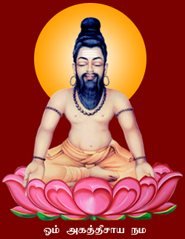
Agastya Mahaṛṣi
Also called Māna, Kalaśaja, Kumbhaja, Kumbhayoni and Maitrāvaruṇi — names from his birth from a kalaśa (pot), as the son of Mitra and Varuṇa.
- Counted among the Sapta Ṛṣis, the seven most revered seers, in several traditions.
- Seer of several hymns of the Ṛgveda (Maṇḍala 1).
- His wife was the learned Lopāmudrā, herself a seer of a Ṛgvedic hymn.
- One of the 18 Tamil Siddhars — revered as the first Siddhar. Tradition credits him with Agattiyam, an early grammar of the Tamil language. His abode is held to be the Podhigai hills of the Western Ghats.
- He is said to have humbled the Vindhya mountain and travelled south, bringing Vedic culture to the southern lands.
- He appears throughout the Itihāsas and Purāṇas, including the Rāmāyaṇa and Mahābhārata. In the Rāmāyaṇa he taught Śrī Rāma the Āditya Hṛdayam on the battlefield of Laṅkā.
- Works attributed to him include the Agastya Gītā (in the Varāha Purāṇa), the Agastya Saṁhitā (in the Skanda Purāṇa) and the Dvaidha-nirṇaya Tantra.
- His fame reached beyond Bhārath: he is the principal figure and Guru of the old Javanese text Agastyaparva, and is honoured across Southeast Asia.
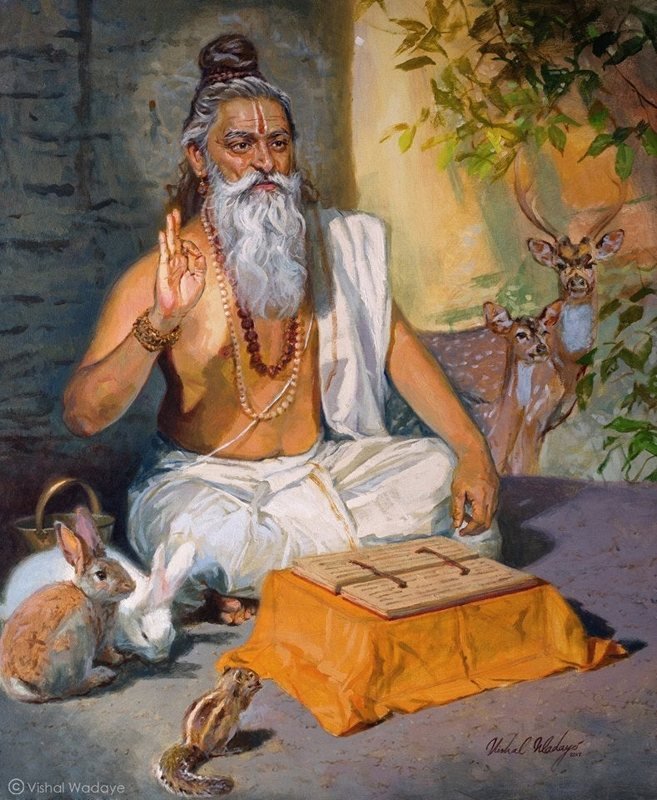
Vasiṣṭha Mahaṛṣi — Brahmarṣi
- One of the Sapta Ṛṣis, and the chief seer of Maṇḍala 7 of the Ṛgveda.
- Regarded as the first sage of the Vedānta school.
- The Yoga Vāsiṣṭham (his teaching to Śrī Rāma), the Vasiṣṭha Saṁhitā, and some versions of the Agni Purāṇa are attributed to him.
- The Kula-Guru of the Ikṣvāku dynasty and the Guru of Śrī Rāma.
- Possessor of the divine cow Kāmadhenu and her daughter Nandinī.
- His wife Arundhatī is honoured as the ideal of devotion.
The Brahma-daṇḍa
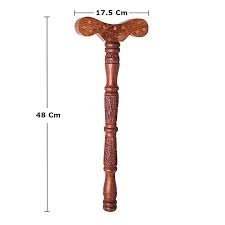
As a Brahmarṣi, Vasiṣṭha held the Brahma-daṇḍa — the staff of spiritual power, said to protect even against the Brahmāstra. With it he absorbed every weapon that Viśvāmitra hurled at him.
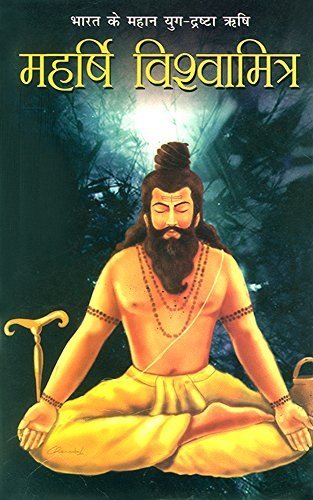
Viśvāmitra Mahaṛṣi — from King to Brahmarṣi
- Viśvāmitra was a king, also called Kauśika (descendant of Kuśa), of the Amāvasu dynasty — originally the Chandravaṁśī (Somavaṁśī) king of Kānyakubja (modern Kannauj).
- He is the seer of the Gāyatrī Mantra (Ṛgveda 3.62.10) and of Maṇḍala 3 of the Ṛgveda. Gāyatrī is also the name of the Vedic metre in which this verse is composed.
- The Purāṇas say only 24 Ṛṣis since antiquity have understood the whole meaning of the Gāyatrī — Viśvāmitra the first, and Yājñavalkya the last.
- He became the teacher of Śrī Rāma. The Vālmīki Rāmāyaṇa (Bāla Kāṇḍa, sarga 51 onwards) tells his story.
His journey to Brahmarṣi
- After travelling around his kingdom, King Viśvāmitra visited the āśrama of Vasiṣṭha and was served a royal feast produced by Kāmadhenu (Surabhi).
- He desired Kāmadhenu for himself; Vasiṣṭha refused, and a battle followed.
- Defeated, Viśvāmitra performed tapas to Lord Śiva to gain divine astras and śastras — but Vasiṣṭha’s Brahma-daṇḍa absorbed them all.
- Realising spiritual power is greater than royal might, he resolved to become a Brahmarṣi and did tapas to Lord Brahmā, who first made him a Rājarṣi.
- Triśaṅku wished to ascend to Svarga in his own body. Cursed by Vasiṣṭha’s disciples, he took refuge with Viśvāmitra. When no god came to his yajña, Viśvāmitra lifted Triśaṅku by his own power; Indra pushed him back for disrespecting his Guru, and Viśvāmitra began to create a new Svarga — until Brahmā intervened. Triśaṅku remained as a constellation.
- He resumed tapas. Indra sent the apsarā Menakā; from their union was born Śakuntalā, mother of Bharata, after whom our land is named.
- Brahmā made him a Mahaṛṣi. Indra then sent Rambhā; in anger Viśvāmitra cursed her to become a stone for 1,000 years — and lost his tapas-power.
- He undertook the severest penance — without food, water or even breath. Indra came disguised as a poor Brāhmaṇa asking for food, and Viśvāmitra gave away his own food without hesitation.
- Finally Brahmā blessed him as a Brahmarṣi — but Viśvāmitra wanted Vasiṣṭha himself to say so. At the āśrama he overheard Arundhatī asking why Vasiṣṭha did not declare him a Brahmarṣi; Vasiṣṭha replied that he loved him too much — declaring it early would stop his progress.
- Moved, Viśvāmitra bowed down to Vasiṣṭha, who then declared him a Brahmarṣi.
Conquest of the six inner enemies
He overcame the Ariṣaḍvarga — Kāma (lust), Krodha (anger), Lobha (greed), Mada (arrogance), Moha (delusion) and Mātsarya (jealousy) — and cognised the Samaṣṭi Mantra, the Gāyatrī: a prayer of compassion for all human beings, asking the light of consciousness that pervades all creation to illumine and stimulate the intellect of everyone towards Self-realisation.
See the full Gāyatrī Mantra Dīkṣā.
“We meditate on the adorable radiance of the divine Savitṛ; may that light inspire our intellect.”