Why We Wear Tilak, Vibhūti and Kumkum on the Forehead
Walk into any temple in Bhārat and you will see it on almost every face — three white lines of holy ash, a tall white-and-red nāmam, a soft circle of sandal paste, a bright dot of kumkum. These marks are not decoration. Each one is a small act of worship placed on the most sacred point of the body, a reminder of the Lord carried through the whole day, and a sign of the path one walks.
A traditional verse on the glory of bhasma
śrīkaraṃ ca pavitraṃ ca śoka-roga-nivāraṇam |
loka-vaśīkaraṃ puṃsāṃ bhasma trailokya-pāvanam ||
Holy ash brings auspiciousness and purity, removes sorrow and disease, wins the goodwill of the world, and sanctifies the three worlds.
| Sanskrit names | tilaka (the mark), puṇḍra (a line or streak), tripuṇḍra (three horizontal lines), ūrdhvapuṇḍra (the upward mark), bindu (the dot) |
|---|---|
| Where | bhrū-madhya — the point between the eyebrows, the seat of the ājñā cakra; also on other parts of the body during worship |
| Materials | Vibhūti / bhasma (sacred ash) · gopīcandana and white clay (tirumaṇ) · śrīcūrṇam · kumkum · candana (sandal paste) · sindūra · turmeric |
| Key scriptures | Kālāgnirudra Upaniṣad (Kṛṣṇa Yajur Veda) · Bṛhajjābāla and Bhasmajābāla Upaniṣads (Atharva Veda) · Vāsudeva Upaniṣad (Sāma Veda) · Padma and Skanda Purāṇas · Bhagavad Gītā 5.27, 8.10 |
1. Why the forehead?
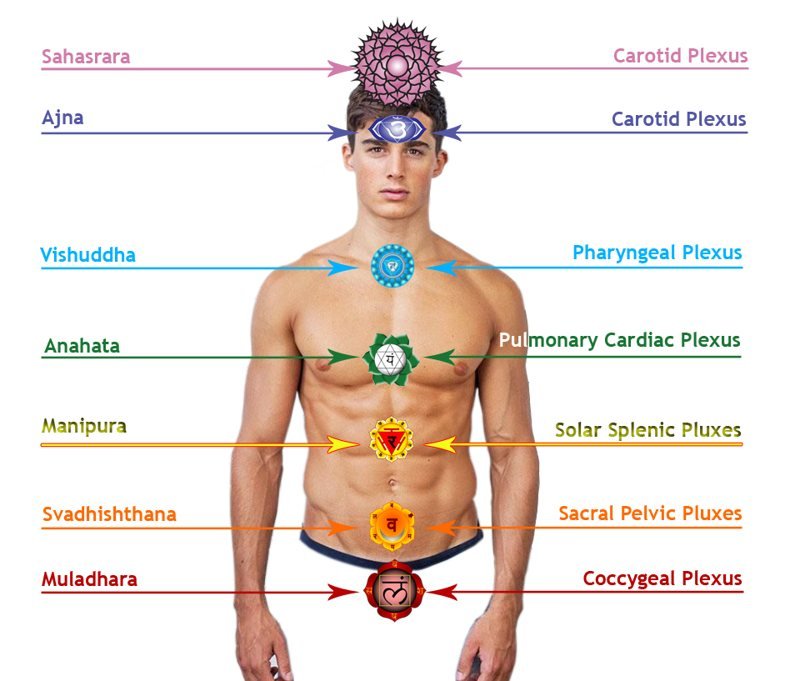
The point between the eyebrows is the ājñā cakra. Ājñā means “command” — in the yoga tradition this is the centre where the disciple receives the command of the Guru, where the two great nāḍīs, iḍā and piṅgalā, meet suṣumṇā, and where the mind is gathered into one point. Placing a sacred mark here is placing the Lord, or the Guru, on the very doorway of inner sight.
The Bhagavad Gītā itself directs attention to this point. At the close of the fifth chapter the sage is described fixing the gaze cakṣuś caivāntare bhruvoḥ — “between the brows” (5.27), and at the hour of death the yogī is told to draw the prāṇa bhruvor madhye — “into the middle of the brows” (8.10).
- A constant reminder. Every time we see the mark in a mirror, or feel it on the skin, the mind turns back to the Lord for a moment.
- A mark of the path. The shape tells the world, without a word, whether one worships Śiva, Viṣṇu or the Divine Mother.
- Protection. Tradition holds that the sacred mark guards this sensitive point, and the scriptures speak of bhasma as protection (rakṣā) itself.
- Cooling and calm. Sandal paste and ash are traditionally used to keep the forehead cool and the mind quiet — the reason candana is offered first to the deity and then worn as prasādam.
- Completion of worship. In daily pūjā, the tilaka is worn before the sandhyā or pūjā begins; rituals are said to bear no fruit when done with a bare forehead.
2. The three great families of sacred marks
🔱 Śaiva — Tripuṇḍra
Material: vibhūti (holy ash)
Shape: three horizontal lines across the forehead, often with a red dot in the centre
Meaning: Śiva burns away all that is impermanent; what remains is pure ash — and pure consciousness
Source: Kālāgnirudra, Bṛhajjābāla and Bhasmajābāla Upaniṣads
🪷 Vaiṣṇava — Ūrdhvapuṇḍra
Material: gopīcandana or white clay, with a red or yellow centre line
Shape: vertical lines rising upward, in a U or Y form
Meaning: the footprint of the Lord, the upward path to Viṣṇu’s highest abode, and Lakṣmī at the centre
Source: Vāsudeva Upaniṣad, Padma Purāṇa, Pāñcarātra Āgamas
🔴 Śākta — Kumkum
Material: kumkum, sindūra
Shape: a round dot or a short vertical line; sindūra in the hair-parting
Meaning: the red of Śakti — the living energy of the Divine Mother — and the auspiciousness (saubhāgya) of the home
Source: Devī worship, Śrī Vidyā tradition, Lalitā Sahasranāma
3. The marks at a glance
The illustrations below show the most common forehead marks of Bhārat. Every sampradāya has its own small variations of width, colour and length — these are the broad forms.
Illustrations drawn for Brahma Jñāna Gurukulam.
4. Vibhūti — the holy ash
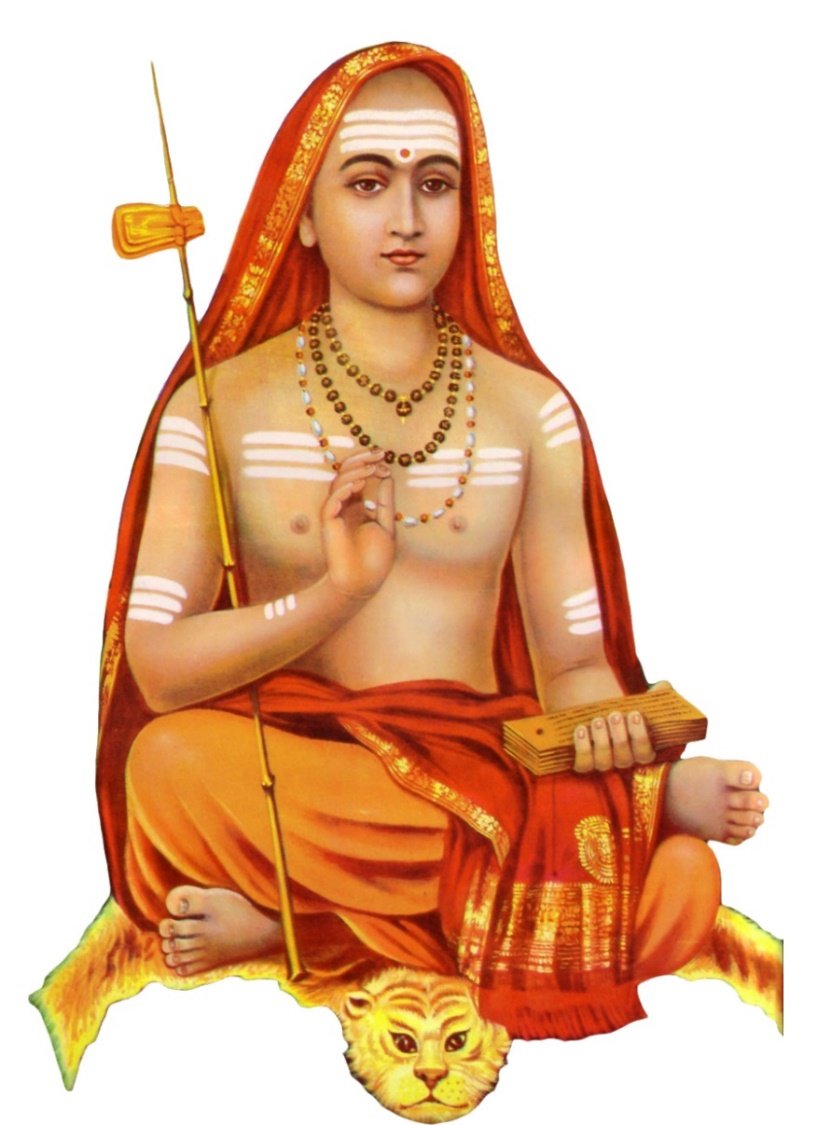
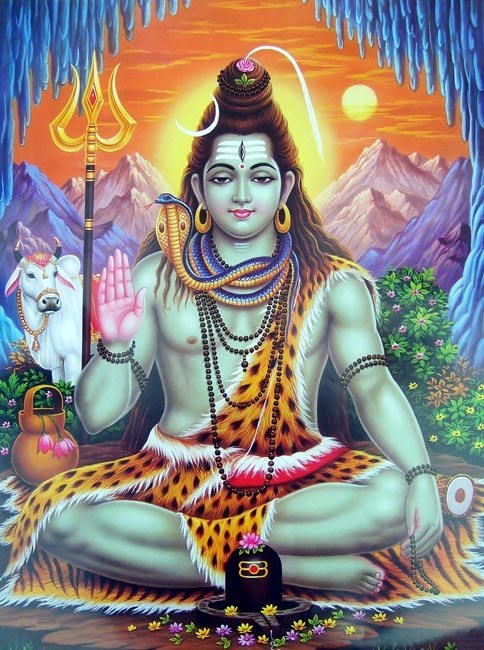
Ancient texts say that when Kāmadeva, the god of desire, disturbed Lord Śiva’s meditation, Śiva opened his third eye and burnt him to ash. From that moment ash has stood for the burning of desire, and Śiva is adorned with it. Devotees believe that sacred ash removes sins, purifies the soul, destroys evil and protects from disease.
The deeper teaching is simple and strong: everything we see will one day become ash. Fire reduces wood, body and every form to the same grey powder, which itself cannot burn any further. To wear vibhūti is to remember what is impermanent, and to bow to That which no fire can touch.
The old saying puts it bluntly — a forehead without holy ash is a ruined forehead. Holy ash is to be worn by all, irrespective of caste, creed, sex or any other difference. Holding the powers of both Agni and Soma, it refreshes the one who wears it, and for the seeker of yoga it kindles the spirit and brings early fruit.
The three lines of the tripuṇḍra — Kālāgnirudra Upaniṣad
In the Kālāgnirudra Upaniṣad, the sage Sanatkumāra asks Lord Kālāgnirudra (Śiva as the fire of time) about the rules of the tripuṇḍra: its material, its places and its measure. The Lord explains that the ash is taken from the sacred fire, mixed with water and drawn in three lines across the forehead from eye to eye with the three middle fingers. Each line holds a whole world of meaning:
| First line | Second line | Third line | |
|---|---|---|---|
| Sacred fire | Gārhapatya | Dakṣiṇāgni | Āhavanīya |
| Syllable of Om | A | U | M |
| Guṇa | Rajas | Sattva | Tamas |
| World | Bhū — earth | Antarikṣa — mid-space | Dyu — heaven |
| Self | Ātmā | Antarātmā | Paramātmā |
| Power | Kriyā-śakti (action) | Icchā-śakti (will) | Jñāna-śakti (knowledge) |
| Veda | Ṛg Veda | Yajur Veda | Sāma Veda |
| Time of the rite | Morning | Midday | Evening |
| Deity | Maheśvara | Sadāśiva | Mahādeva |
The mantras named for the rite are the pañca-brahma mantras while taking the ash, agnir iti bhasma to sanctify it, mā nas toke from the Śrī Rudram while lifting it out, tryāyuṣam while mixing it with water, and tryāyuṣa, tryambaka and triśakti while drawing the three lines. The Upaniṣad closes by saying that one who wears the tripuṇḍra with understanding attains union with Śiva and does not return.
The five ashes from the five faces of Śiva — Bṛhajjābāla Upaniṣad
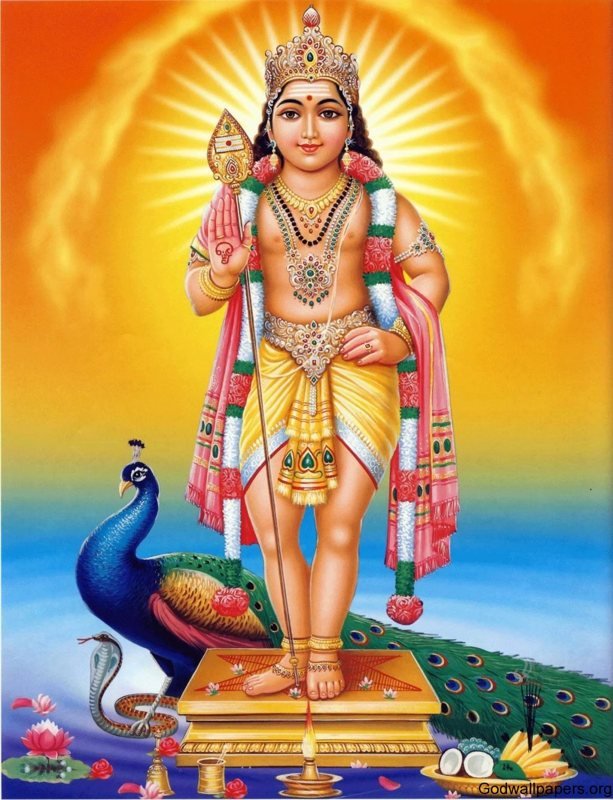
In the Bṛhajjābāla Upaniṣad, Lord Kālāgnirudra teaches the sage Bhusuṇḍa where holy ash comes from. From each of Śiva’s five faces arises an element; from the element a power (kalā); from the power a divine cow; and from that cow, a form of sacred ash. This is why the ash is called by five names:
| Face of Śiva | Element | Kalā (power) | Divine cow | Ash | Why so called |
|---|---|---|---|---|---|
| Sadyojāta | Earth | Nivṛtti | Nandā — tawny-golden | Vibhūti | it raises spiritual power and gives prosperity |
| Vāmadeva | Water | Pratiṣṭhā | Bhadrā — black | Bhasita | it makes everything shine |
| Aghora | Fire | Vidyā | Surabhī — red | Bhasma | it burns all sins to ash and gives wisdom |
| Tatpuruṣa | Air | Śānti | Suśīlā — white | Kṣāra | it neutralises evil and removes danger |
| Īśāna | Space | Śāntyatītā | Sumanā — many-coloured | Rakṣā | it protects from evil forces |
The colours of the cows are given slightly differently in different manuscripts and translations.
Āgneya snāna — the bath of fire
Holy ash purifies the one who wears it, and smearing it over the body is called āgneya snāna, the “bath of fire” — a purification as complete as a bath in water. Renunciates smear the ash from the remains of the ritual fire from the feet up to the head; householders apply it from the head down to the feet.
Where to wear the holy ash — Skanda Purāṇa
Vibhūti may be worn in thirty-two, sixteen, eight or five places, according to one’s time and practice:
32 places
- Head, forehead
- Two ears, two eyes
- Nose, mouth, neck
- Two shoulders, two elbows, two wrists
- Chest, two ribs, navel
- Two sides of the groin, buttocks
- Two ūrus, two thighs
- Two knees, two ankles, two feet
16 places
- Head, forehead
- Two ears, neck
- Two shoulders
- Two elbows
- Two wrists
- Chest, navel
- Two ribs, back
8 places
- Head
- Forehead
- Two ears
- Two shoulders
- Chest
- Navel
5 places
- Forehead
- Two shoulders
- Chest
- Navel
A further list of fifteen places is also given: head, forehead, neck, chest, both sides of the belly, both arms, both ankles, both wrists, both sides of the back and the back of the neck.
Mantras while applying the holy ash
When wearing the holy ash, one chants Śivāya namaḥ (the sacred five syllables), or the Sadyojātādi pañca-brahma mantras, or the Tryambakam, or mā no mahāntam from the Rudra Sūktam. The Upaniṣads teach that the Mṛtyuñjaya mantra should be chanted while applying ash on the forehead:
Mahā Mṛtyuñjaya Mantra
oṃ tryambakaṃ yajāmahe sugandhiṃ puṣṭi-vardhanam |urvārukam iva bandhanān mṛtyor mukṣīya māmṛtāt || We worship the three-eyed Lord, fragrant, who increases nourishment. As the ripe cucumber is freed from its stalk, may He free us from death — and not from immortality.
Pañca-kalā mantras
oṃ nivṛtti-kalāyai namaḥoṃ pratiṣṭhā-kalāyai namaḥ
oṃ vidyā-kalāyai namaḥ
oṃ śānti-kalāyai namaḥ
oṃ śāntyatīta-kalāyai namaḥ
Pañca-brahma mantras
oṃ īśānāya namaḥoṃ tatpuruṣāya namaḥ
oṃ aghorāya namaḥ
oṃ vāmadevāya namaḥ
oṃ sadyojātāya namaḥ
Ṣaḍaṅga nyāsa
oṃ hṛdayāya namaḥoṃ śirase svāhā
oṃ śikhāyai vaṣaṭ
oṃ kavacāya hum
oṃ netratrayāya vauṣaṭ
oṃ astrāya phaṭ
Vibhūti mantra of Sri Sathya Sai Baba
paramaṃ pavitraṃ bābā vibhūtiṃparamaṃ vicitraṃ līlā vibhūtiṃ
paramārtha iṣṭārtha mokṣa pradānaṃ
bābā vibhūtim idam āśrayāmiI take refuge in Baba’s supremely sacred vibhūti — the wondrous vibhūti of His play, which grants the highest goal, the desired goal and liberation. Sri Sathya Sai Baba always gave vibhūti to his devotees, and this mantra is widely chanted today.
5. Ūrdhvapuṇḍra — the Vaiṣṇava nāmam
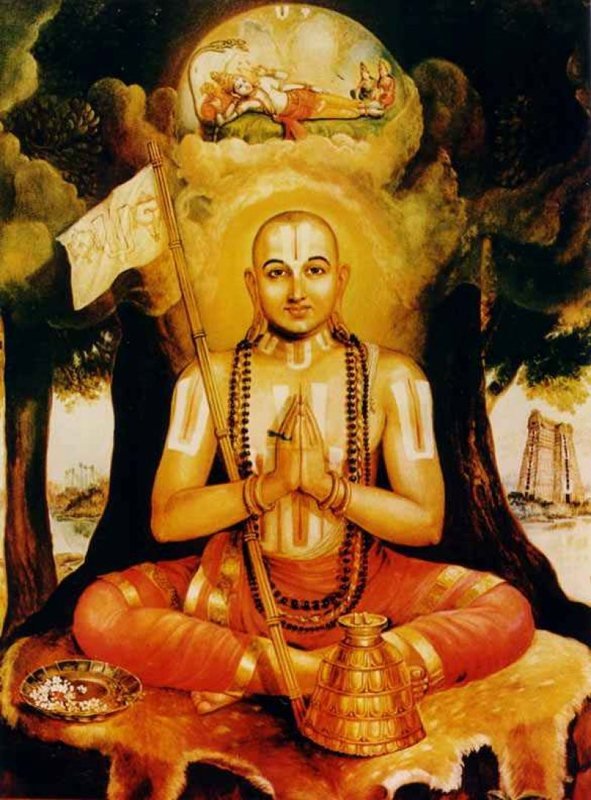
The Vaiṣṇava mark rises upward — ūrdhva — from the bridge of the nose towards the hairline, pointing the wearer to the highest abode of Viṣṇu. In the Vāsudeva Upaniṣad, the sage Nārada bows to Lord Vāsudeva and asks for the rules of the ūrdhvapuṇḍra. The Lord teaches that it is made with gopīcandana, the sacred yellow-white clay of Dvārakā, and that its three lines are the three letters A, U and M of the praṇava — so the mark is “full of Om”. If gopīcandana is not available, clay from the root of the tulasī plant or sandal paste may be used.
The Upaniṣad ends with the famous Ṛg Veda verse (1.22.20) that is the very heart of the mark:
Ṛg Veda 1.22.20 · quoted at the close of the Vāsudeva Upaniṣad
tad viṣṇoḥ paramaṃ padaṃ sadā paśyanti sūrayaḥ |
divīva cakṣur ātatam ||
The wise always behold that highest step of Viṣṇu, spread out like an eye in the sky.
- The white U is the Lord’s footprint, the lotus feet on which the devotee places his head.
- The red or yellow centre line — the śrīcūrṇam — is Śrī Mahālakṣmī, who never leaves the heart of the Lord, and through whom the devotee approaches Him.
- Vaḍakalai and Teṅkalai Śrī Vaiṣṇavas wear the U and Y forms respectively; Mādhvas wear two gopīcandana lines with a dark centre line from the sacrificial fire; Gauḍīya Vaiṣṇavas add a tulasī leaf on the nose; the Vallabha tradition wears a red U.
The twelve nāmas of the Lord on the body
In the Vaiṣṇava tradition the ūrdhvapuṇḍra is worn not only on the forehead but at twelve places on the body, each with a name of the Lord, so that the whole body becomes a temple guarded by Keśava and His forms:
| # | Place | Mantra |
|---|---|---|
| 1 | Forehead | oṃ keśavāya namaḥ |
| 2 | Middle of the belly | oṃ nārāyaṇāya namaḥ |
| 3 | Chest | oṃ mādhavāya namaḥ |
| 4 | Hollow of the throat | oṃ govindāya namaḥ |
| 5 | Right side of the belly | oṃ viṣṇave namaḥ |
| 6 | Right upper arm | oṃ madhusūdanāya namaḥ |
| 7 | Right shoulder | oṃ trivikramāya namaḥ |
| 8 | Left side of the belly | oṃ vāmanāya namaḥ |
| 9 | Left upper arm | oṃ śrīdharāya namaḥ |
| 10 | Left shoulder | oṃ hṛṣīkeśāya namaḥ |
| 11 | Upper back | oṃ padmanābhāya namaḥ |
| 12 | Lower back | oṃ dāmodarāya namaḥ |
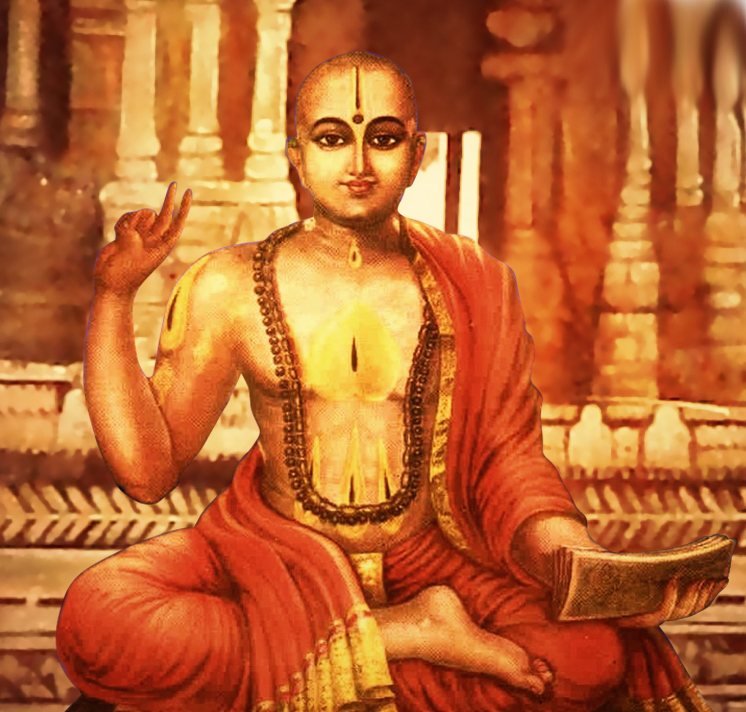
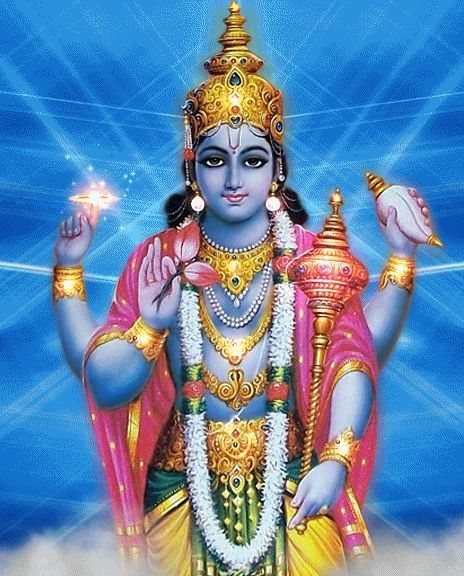
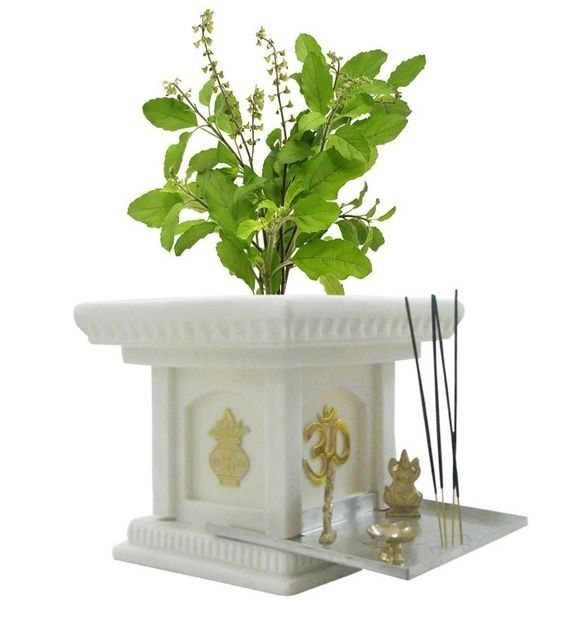
Śrī Madhvācārya · Lord Mahāviṣṇu · the tulasī, whose root clay may be used for the tilaka
6. Kumkum and Sindūra — the red of Śakti
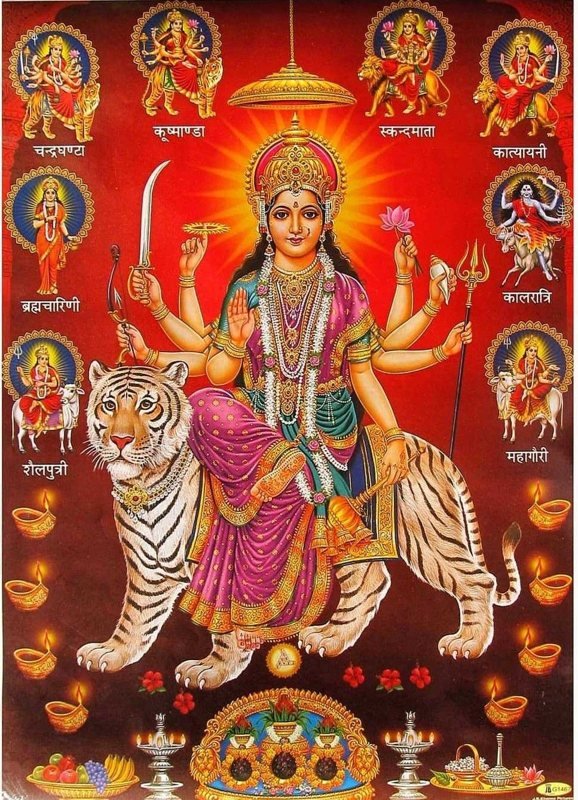
Red is the colour of Śakti — of life, of blood, of the rising sun and of the Divine Mother’s energy that moves the whole universe. The dhyāna verse recited before the Lalitā Sahasranāma begins by seeing the Mother as sindūrāruṇa-vigrahām — “whose form is red as vermilion”. When we wear kumkum, we carry a drop of that power on the ājñā cakra.
- What kumkum is. Traditional kumkum is made from turmeric that turns deep red when treated with slaked lime or alum. Turmeric itself is sacred and is valued in Āyurveda for its cleansing qualities.
- Kumkum prasādam. In every Devī temple, kumkum offered at the Mother’s feet is returned to the devotee as prasādam — men and women alike wear it after worship.
- Saubhāgya. For married women, kumkum on the forehead and sindūra in the parting of the hair are signs of auspiciousness and of prayer for the husband’s long life.
- Kumkum with vibhūti or candana. Śaivas often place a kumkum dot below the three lines of ash — Śiva and Śakti together. Sandal paste with a kumkum dot is common across South India.
⚠️ A practical caution: some cheap kumkum and sindūra sold today contain synthetic dyes or lead compounds. Buy from a trusted source, or prepare it at home from turmeric, and stop using any product that irritates the skin.
7. Candana — sandal paste
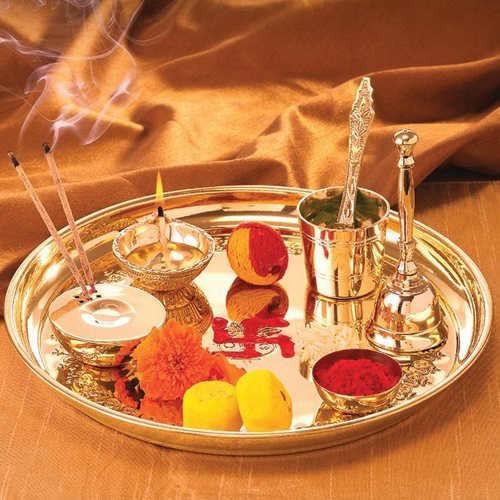
Sandal paste (candana or gandha) is the first of the offerings in the pañcopacāra pūjā. With the words laṃ pṛthvyātmane gandhaṃ samarpayāmi it is offered to the deity as the earth element — fragrance — and then received back on the forehead as prasādam.
Sandal is naturally cooling. Applied between the brows it is said to calm the mind and the heat of the head, which is why it is worn in hot seasons, by Vaiṣṇavas and Śaivas alike, and often mixed with a little saffron or kumkum. A sandal-and-kumkum tilaka is also how guests are welcomed at weddings and festivals.
8. How to apply the tilaka
- When: after the morning bath and before sandhyā, pūjā or japa; and again after visiting the temple.
- Facing: east or north, seated, with a quiet mind — the tilaka is itself a small pūjā.
- With a mantra: Śivāya namaḥ or the Tryambakam for vibhūti; Keśava and the twelve names for the nāmam; the Mother’s name for kumkum. In Śaiva practice, vibhūti is drawn with the three middle fingers.
- Which finger: it is commonly taught that the ring finger brings peace, the middle finger long life, the thumb strength and nourishment, and the index finger liberation. Traditions differ, so follow your own family or Guru.
- With reverence: take the ash or kumkum in the right hand, never let it fall to the ground carelessly, and do not wipe it off in haste.
Sources & where to read
- Kālāgnirudra Upaniṣad — English translation — the three lines of the tripuṇḍra
- Bṛhajjābāla Upaniṣad — English translation — the five ashes from the five faces of Śiva
- Vāsudeva Upaniṣad — English translation — the ūrdhvapuṇḍra and gopīcandana
- Tripundra — overview and scriptural references
- Urdhva Pundra — Vaiṣṇava sampradāya styles
- Tilaka — forehead marks across traditions
Adapted and expanded from the author’s earlier notes on mantrayogam.com.