Darśana 1
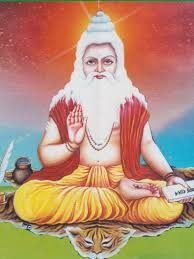
Nyāya — by Gautama Muni
- Nyāya literally means “rules”, “method” or “judgment” — the science of logic and valid reasoning.
- Its foundational text is the Nyāya Sūtras, attributed to Akṣapāda Gautama.
- Much of later logical and scientific thinking — including Western philosophy and Buddhist logic — shows close parallels with its methods.
The Nyāya Sūtras — the foundational text
The Nyāya Sūtras are the root text of the science of knowledge and logic. They set the foundation for Nyāya’s empirical theory of validity and truth — that knowledge must be tested by sound means of proof, not accepted by uncritical appeal to intuition or authority alone. The Nyāya Sūtras are closely related to the Vaiśeṣika system and extend its theory of knowledge and reality.
| Structure | 5 books (adhyāyas), each with 2 chapters (āhnikas) |
|---|---|
| Sūtras | 528 aphoristic sūtras in all |
| Subject | Knowledge and logic |
| Book | Contents |
|---|---|
| 1 | General introduction and “table of contents” — the sixteen categories (padārthas) of knowledge |
| 2 | Pramāṇa — the means of valid knowledge (epistemology) |
| 3 | Prameya — the objects of knowledge |
| 4 – 5 | Further discussion of the nature of knowledge, debate and its errors |
Scholars think Books 1 and 5 may be the earliest layer of the text and Books 3 and 4 the latest additions — though this is not certain.
The great commentaries
- Nyāya Bhāṣya of Vātsyāyana (c. 450 – 500 CE) — the earliest surviving commentary
- Nyāya-vārttika of Uddyotakara (c. 6th – 7th century)
- Tātparya-ṭīkā of Vācaspati Miśra (9th century)
- Tātparya-pariśuddhi of Udayana (10th century)
- Nyāya-mañjarī of Jayanta Bhaṭṭa (10th century)
The Pramāṇas — valid means of knowledge
- Pratyakṣa — perception
- Anumāna — inference
- Upamāna — comparison and analogy
- Arthāpatti — postulation, derivation from circumstances
- Anupalabdhi — non-perception, negative/cognitive proof
- Abhāva — non-existence
- Śabda — testimony of past or present reliable experts
The sixteen Padārthas (categories) of the Nyāya Sūtras
- Pramāṇa — valid means of knowledge
- Prameya — objects of valid knowledge
- Saṁśaya — doubt
- Prayojana — aim
- Dṛṣṭānta — example
- Siddhānta — conclusion
- Avayava — members of the syllogism
- Tarka — hypothetical reasoning
- Nirṇaya — settlement
- Vāda — discussion
- Jalpa — wrangling
- Vitaṇḍā — cavilling
- Hetvābhāsa — fallacy
- Chala — quibbling
- Jāti — sophisticated refutation
- Nigrahasthāna — point of defeat